Is Cow-Calf Contact (CCC) the First Step Towards a More Animal-Friendly Dairy Industry?

Written by Emilie, veterinarian
Share message

Balancing Animal Welfare, Health, and On-Farm Practicality
Yes, Cow-Calf contact (CCC) systems offers a valuable step toward more sustainable and animal-friendly dairy production, but it requires tailor-made management, adapted facilities, and a carefully considered approach.
The way we produce milk is receiving increasing public attention. Consumers today expect not only quality, but also genuine care for animal welfare. One of the practices under scrutiny in recent years is the immediate separation of cow and calf after birth.
In dairy farming, this has been the standard for decades. However, there is growing awareness that a sustainable future for the sector depends not only on production efficiency, but also on social acceptance. This calls for new ways of thinking, such as Cow-Calf contact systems (CCC).
Cow-Calf Contact (CCC): A New Perspective on Dairy Management
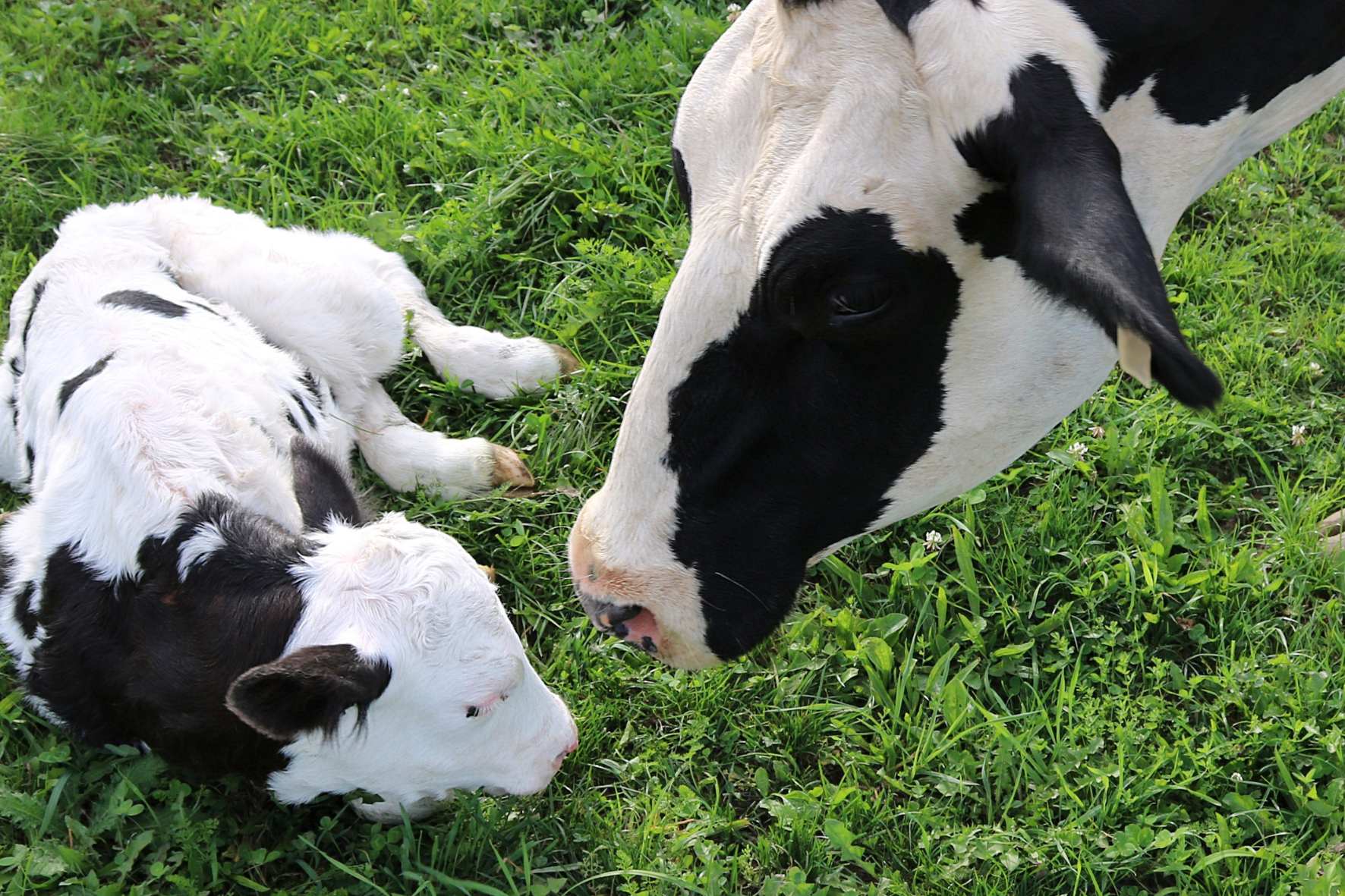
In a CCC system, the cow and calf remain together for a longer period after birth. Instead of being separated immediately, the calf is given the opportunity to stay with its mother (or a foster cow), with or without the possibility to suckle.
There are two main types of systems:
- Full contact: The cow and calf have unrestricted physical contact — including suckling, licking, and resting together.
- Partial contact: Physical contact is possible, but suckling is prevented (for example, through a fence or udder cover).
Additionally, the contact can take place continuously (throughout the day) or partially (for example, for a few hours each day).

Why Is Early Cow-Calf Separation Common in Dairy Farming?
In most dairy farms, calves are separated from their mothers shortly after birth. There are good reasons for this practice:
- Economic: A calf can drink up to 15 litres of milk per day — milk that would otherwise be sold.
- Health: Early separation makes it easier to ensure the calf receives the right amount of colostrum and allows close monitoring of its health
- Practical: Traditional housing is designed for cows, not for raising young calves alongside their mothers.
- Behavioural: Separating calves early is believed to prevent a strong maternal bond, which could make later separation less stressful.
Yet, while these reasons make sense on paper, they come with real costs. Calves miss out on natural behaviours like suckling and bonding, may engage in cross-suckling or other hunger-driven behaviours, and can experience slower growth and limited social development.
Balancing these practical needs with animal welfare is at the heart of the debate and it’s why cow-calf contact systems are gaining attention as a more animal-friendly alternative.
Supporting Natural Cow-Calf Behaviour
Cow-Calf contact systems are designed to give cows and calves more opportunity to express their natural behaviours, an approach that is gaining interest among farmers and is increasingly valued by consumers. Research highlights several benefits:
- Faster growth: Calves with maternal contact grow up to 1,4 kg/day, compared to 0,85 kg/day in conventional rearing systems.
- Calmer, more social calves: Maternal contact supports better social development and reduces stress-related behaviours.
- Natural maternal behaviours: Mother cows can engage in licking, caring for, and protecting their calves.
- Health benefits: Allowing calves to suckle has been shown to have a protective effect against mastitis.
- Overall herd health: Farmers using CCC often report healthier calves and cows.
Conclusion: CCC systems can support both animal welfare and health, while aligning with the growing societal expectation for more animal-friendly dairy production.
Facing the Challenges: Practical Considerations
Cow-Calf contact (CCC) systems offer many benefits, but they also bring practical challenges that farmers need to consider:
- Lower milk yield during the suckling period.
- Housing and management adjustments are often required to ensure calves are safe, healthy, and hygienically housed.
- Stress at separation after weeks of living together.
- Colostrum intake may not always be guaranteed.
- Handling challenges: Calves with full contact can be more difficult to manage if they have limited interaction with humans.
That said, this last challenge is not necessarily a barrier — positive human socialisation can help mitigate handling difficulties.
These considerations show that CCC systems require a thoughtful, well-planned approach, balancing the needs of both animals and farmers to achieve optimal welfare and practical outcomes.
Partial CCC Systems: A Feasible Approach
Partial Cow-Calf contact (CCC) systems offer an interesting middle ground. In these systems, the calf maintains social contact with its mother while receiving its milk from the caregiver.
Advantages of partial Cow-Calf contact systems include:
- Better control over milk production and calf health.
- Reduced stress at weaning.
- Calves remain familiar with human interaction.
Research shows that calves in partial CCC systems tend to be less fearful of humans, which is a significant benefit for long-term welfare. Partial CCC systems thus provide a feasible compromise, balancing natural maternal interaction with practical management and human-animal familiarity.
Conclusion: Building a Sustainable and Animal-Friendly Dairy Industry
Cow-Calf contact is promising, but not without challenges. It clearly benefits animal welfare, growth, and behaviour, while meeting societal expectations. At the same time, it requires careful implementation, adapted infrastructure, and attentive management.
For farmers seeking a future-oriented and animal-friendly dairy operation, CCC is worth considering. It is not a one-size-fits-all solution, but it represents an opportunity that demands tailored strategies and thoughtful planning.
Partial CCC systems may limit the full expression of maternal and calf behaviours, but they reduce the drawbacks of full separation and preserve the benefits of social contact. This makes them a feasible and effective approach to improve welfare, growth, and behavioural outcomes during the rearing period.
Ultimately: CCC may not provide an immediate fix, yet it offers a forward-looking strategy for farmers striving to balance productivity, welfare, and societal expectations.
The information in this article is based on scientific insights and practical experience. References are available upon request.

Frequently Asked Questions About Cow-Calf Contact Systems
What is a Cow-Calf contact (CCC) system?
In a Cow-Calf contact (CCC) system, calves remain with their mothers after birth, giving them the opportunity to exhibit natural behaviours.
What are the benefits of a Cow-Calf contact (CCC) system?
A Cow-Calf contact system promotes animal welfare, encourages natural behaviour, accelerates calf growth, and can result in healthier cows and calves.
What are the challenges of a Cow-Calf Contact (CCC) System?
Yes, there are practical challenges: lower milk yield during the suckling period, the need for adapted housing, and potential stress during later separation.
What Is the Difference Between Full and Partial Cow-Calf Contact Systems?
With full contact, the calf can suckle freely from its mother. With partial contact, the calf stays socially connected with its mother but is fed milk by the caregiver instead of suckling
Is Cow-Calf Contact Economically Feasible?
When well-managed and supported by suitable infrastructure, CCC systems can be economically rewarding, especially on farms emphasizing sustainability and social responsibility.
Emilie, veterinarian
Regulatory Affairs Officer – Veterinary Surgeon