The reproductive cycle of cattle
Share message

How does pregnancy work in cattle?
The reproductive cycle of cattle lasts an average of 21 days and consists of four phases: estrus, metestrus, diestrus, and proestrus. A cow is polyestrous, which means that she is cyclically active throughout the year. The term “polyestrous” refers to the fact that cattle have multiple estrous cycles per year as long as they are not pregnant.
Because optimal fertility forms the base of every dairy farm, understanding this cycle is essential: without pregnancy, there is no milk.
The cycle in 4 steps
1. Estrus (day 0) – cow is in heat, ready to be bred.
2. Metoestrus (days 1–4) – ovulation & corpus luteum formation.
3. Diestrus (days 5–18) – progesterone dominates.
4. Proestrus (days 19–21) – preparation for a new heat cycle.
Estrus (day 0)
Estrus, also known as heat or rutting, lasts an average of 18 hours (12–24 hours). During this phase, estrogen levels peak and the cow exhibits typical signs of heat, such as increased activity and mounting and being mounted by other cows.
Best moment for insemination:
Drafty in the morning → inseminate in the afternoon
Drafty in the afternoon → inseminate the next morning

Metestrus (day 1–4)
Metestrus begins immediately after the end of estrus and usually lasts 3 to 4 days. During this phase, ovulation occurs, whereby an egg is released from the mature follicle. This happens approximately 30 hours after the start of estrus or 10-15 hours after the end of the heat cycle. The ruptured follicle forms a corpus luteum (CL) or yellow body that produces progesterone.
Progesterone prepares the uterus for the arrival of the embryo and supports the maintenance of pregnancy if conception has occurred. During metestrus, the cow no longer shows signs of being in heat, is less active, and sometimes has slight blood loss (“bleeding”). After metestrus, the animal enters the diestrus phase.
Diestrus (day 5–18)
The corpus luteum reaches its maximum size and produces large amounts of progesterone. If pregnancy occurs, the corpus luteum remains intact and continues to secrete progesterone throughout the entire gestational period.
In the absence of pregnancy, the uterus produces prostaglandin F2α around day 16-17, which leads to luteolysis (breakdown of the corpus luteum). This causes a drop in progesterone levels and marks the start of a new cycle.
Pro-estrus (day 19 to estrus)
The cow is preparing for a new estrus cycle. Pro-estrus is the transition period between the disappearance of the CL from the previous cycle and the start of a new estrus cycle. This phase usually lasts 1 to 3 days.
During pro-estrus, the pituitary gland secretes follicle-stimulating hormone (FSH), which stimulates the development of follicles in the ovaries. As the follicle grows, more estrogen is produced and released into the bloodstream. This increase in estrogen levels causes the characteristic behavioral changes that occur during estrus.
Frequently asked questions
1. How long does a full cycle last?
An average of 21 days (range 17–24 days).
2. How long is a cow in heat?
Approximately 18 hours, ranging between 12 and 24 hours.
3. When to inseminate?
During the standing tour, approximately 12 hours after the first signs.
4. Is bleeding normal?
Yes, this is part of metestrus.
5. When does the cycle start again?
When prostaglandin F2α breaks down the corpus luteum.
In summary
The reproductive cycle of cows consists of four clearly defined phases in which hormones alternate to enable pregnancy. By understanding this cycle, livestock farmers can optimize fertility and time insemination perfectly.
Interesting products
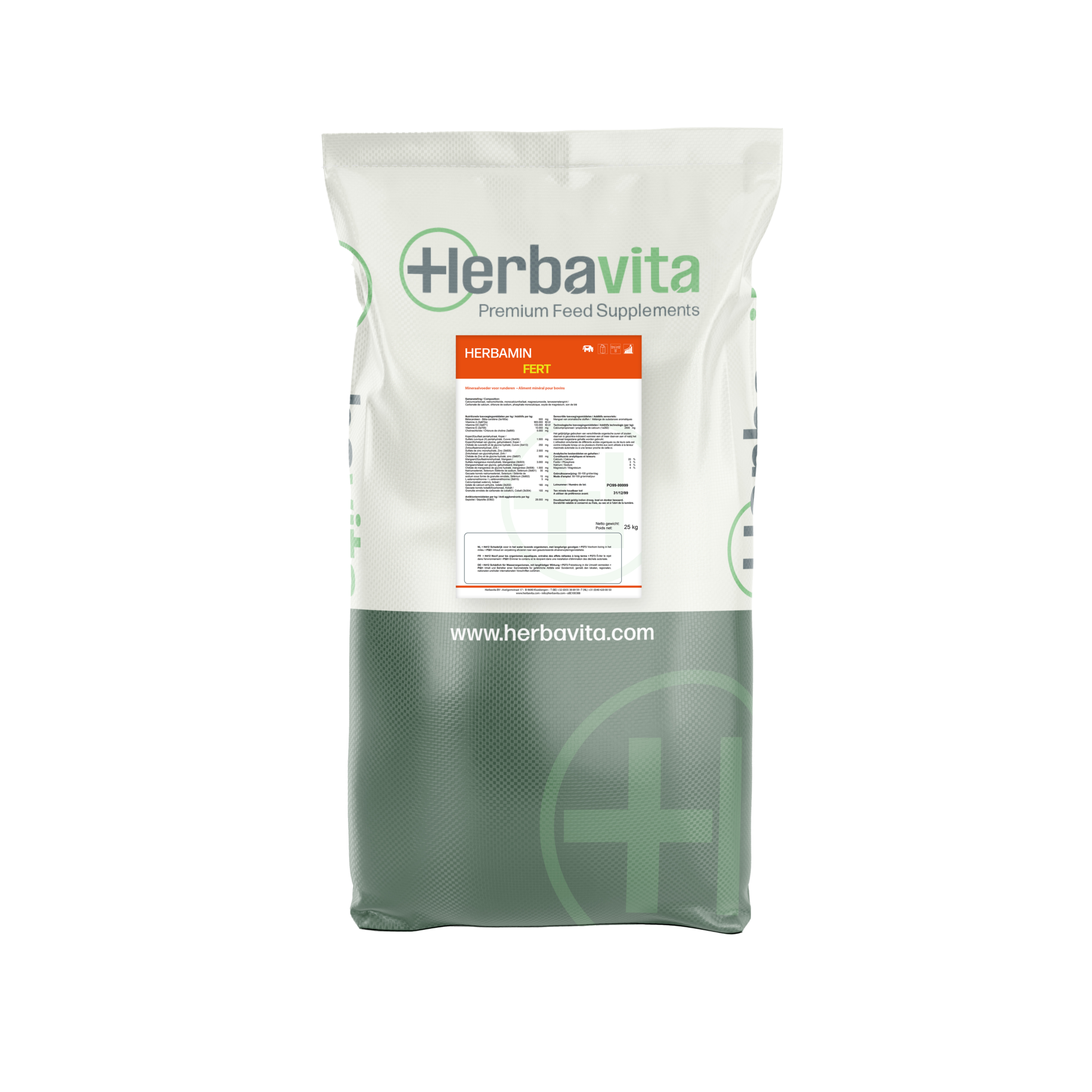
Herbamin Fert
Improve your dairy cattle’s fertility and milk production with Herbamin Fert, enriched with vitamins, minerals, herbs and beta-carotene.
More info
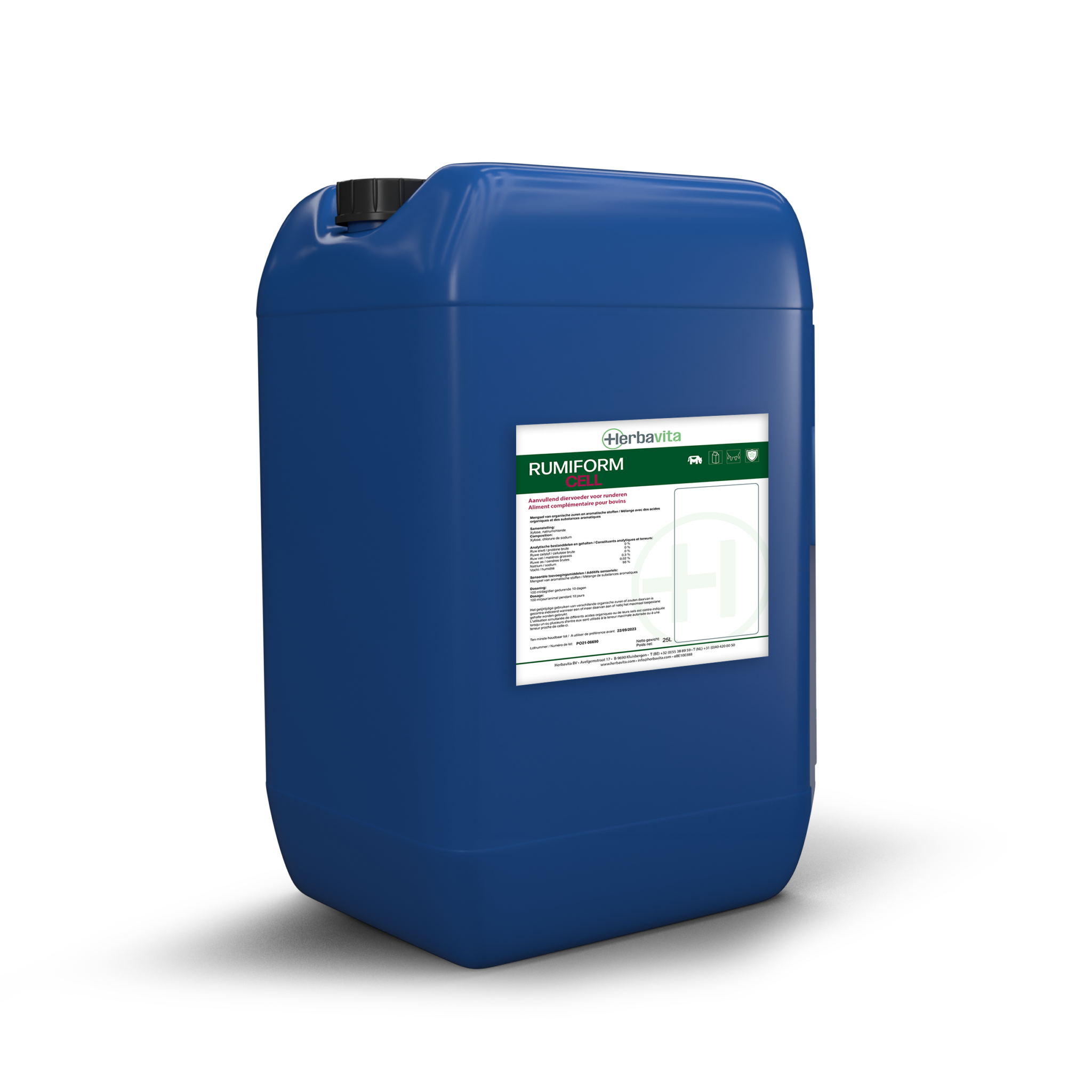
RumiForm Cell
Helps to control the somatic cell count and boosts immunity in high yielding dairy cattle.
More info
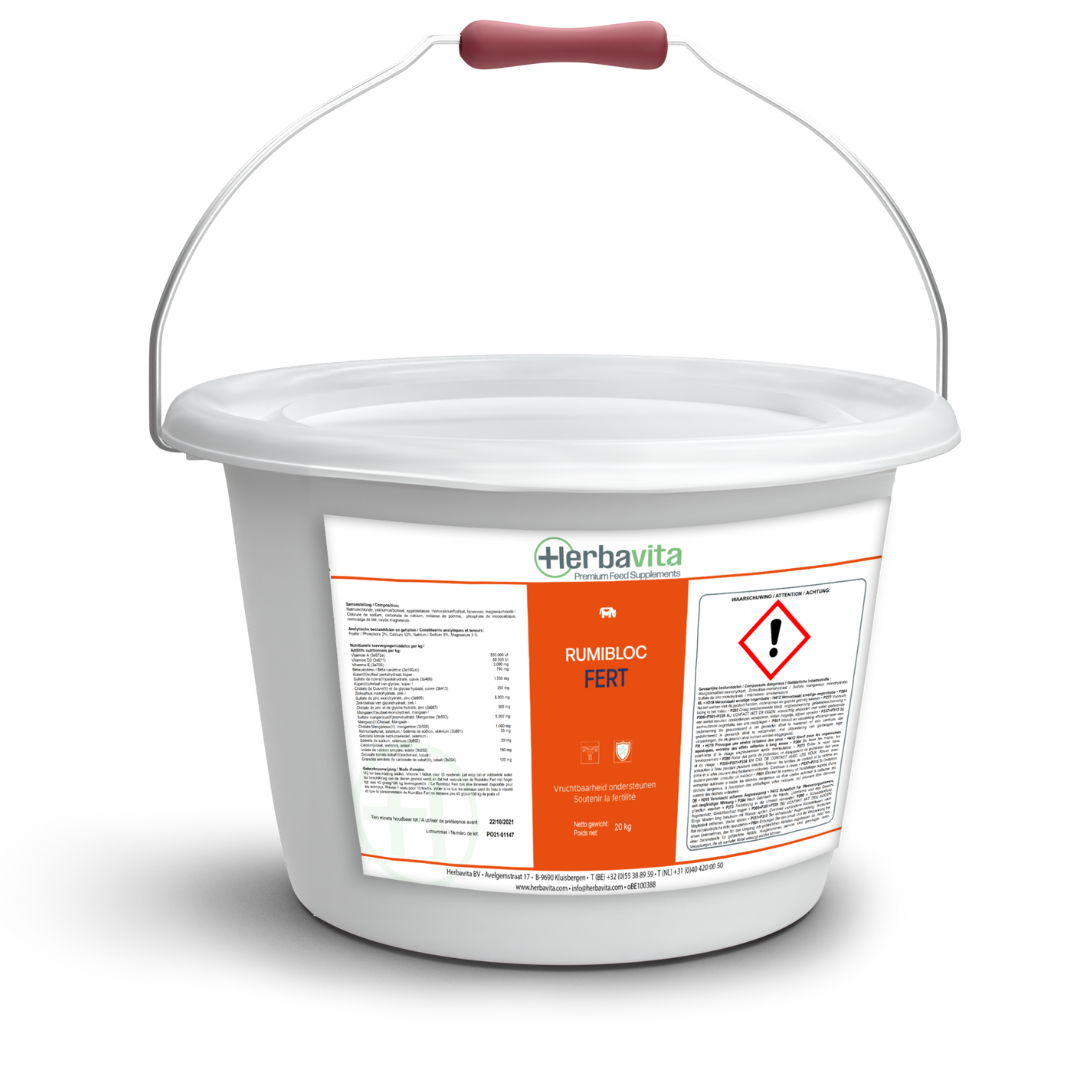
RumiBloc Fert
Promotes the fertility of cattle, both cow and bull, for improved reproductive health and productivity.